If you’ve ever wondered ‘Azure what is’ and how it powers modern businesses, you’re in the right place. This guide breaks down Microsoft Azure from the ground up—simple, powerful, and packed with real-world value.






Azure What Is: The Ultimate Cloud Powerhouse Explained

When people ask ‘Azure what is,’ they’re often looking for more than a textbook definition. They want to understand how Microsoft Azure fits into today’s digital landscape. Simply put, Azure is a cloud computing platform created by Microsoft that enables businesses and developers to build, deploy, and manage applications across a global network of data centers.
Launched in 2010 as Windows Azure, it has evolved into one of the world’s leading cloud platforms, competing directly with Amazon Web Services (AWS) and Google Cloud Platform (GCP). Azure isn’t just about storage or servers—it’s a complete ecosystem for innovation, scalability, and digital transformation.
Core Definition and Origin of Azure
Azure what is becomes clearer when we trace its roots. Originally announced in 2008 and launched in 2010, Azure started as a platform for hosting .NET applications. Over the years, it expanded to support virtually every programming language, framework, and operating system.
Microsoft rebranded it from ‘Windows Azure’ to ‘Microsoft Azure’ in 2014 to reflect its broader capabilities beyond Windows-based services. This shift signaled Azure’s transformation into a fully cross-platform, hybrid-ready cloud solution.
How Azure Compares to Other Cloud Providers
When evaluating ‘Azure what is’ in context, comparison with AWS and GCP is inevitable. While AWS leads in market share, Azure excels in integration with Microsoft products like Office 365, Active Directory, and Dynamics 365—making it a top choice for enterprises already using Microsoft ecosystems.
- AWS: First-mover advantage, vast service catalog.
- Google Cloud: Strong in AI/ML and data analytics.
- Microsoft Azure: Best for hybrid cloud and Microsoft integration.
This makes Azure not just a cloud provider, but a strategic partner for organizations undergoing digital transformation.
“Azure is not just infrastructure—it’s the intelligent cloud that powers the intelligent edge.” — Satya Nadella, CEO of Microsoft
Azure What Is: Key Services That Define Its Power
To truly grasp ‘Azure what is,’ you need to explore its core services. Azure offers over 200 services across computing, networking, storage, AI, and more. These services are modular, meaning businesses can pick and choose based on their needs.
From virtual machines to serverless computing, Azure provides tools that cater to startups and Fortune 500 companies alike. Let’s break down the most impactful categories.
Compute Services: Virtual Machines and Beyond
Azure’s compute services are the backbone of its platform. The most widely used is Azure Virtual Machines (VMs), which allows users to run Windows or Linux environments in the cloud with full control over configuration.
Beyond VMs, Azure offers:
- Azure App Service: For building and deploying web apps without managing infrastructure.
- Azure Functions: A serverless compute service that runs code in response to events.
- Azure Kubernetes Service (AKS): For managing containerized applications at scale.
These services enable developers to focus on code, not servers, accelerating time-to-market.
Storage and Database Solutions
When discussing ‘Azure what is,’ storage is a critical component. Azure provides scalable, secure, and durable storage options:
- Azure Blob Storage: Ideal for unstructured data like images, videos, and backups.
- Azure Files: Cloud file shares accessible via SMB or NFS protocols.
- Azure Disk Storage: High-performance block storage for VMs.
For databases, Azure offers both relational and non-relational options:
- Azure SQL Database: A fully managed relational database as a service (DBaaS).
- Azure Cosmos DB: A globally distributed, multi-model database for high-availability applications.
- Azure Database for MySQL/PostgreSQL: Managed open-source database services.
These services ensure data is always available, protected, and performant.
Azure What Is: The Role of Networking in Cloud Architecture
Understanding ‘Azure what is’ isn’t complete without examining its networking capabilities. Azure provides a robust, secure, and flexible network infrastructure that connects cloud resources, on-premises systems, and users worldwide.
Networking in Azure ensures low latency, high throughput, and enterprise-grade security—critical for mission-critical applications.
Virtual Networks and Subnets
Azure Virtual Network (VNet) is the fundamental building block for private networks in Azure. It enables isolation, segmentation, and secure communication between resources.
Within a VNet, you can create subnets to further organize and secure traffic. For example, you might have separate subnets for web servers, application servers, and databases—each with its own security rules.
VNets also support:
- IP address ranges (both public and private)
- Custom DNS settings
- Network security groups (NSGs) for access control
This level of control makes Azure ideal for complex enterprise architectures.
Connectivity Options: ExpressRoute and VPN Gateway
One of the standout features in ‘Azure what is’ is hybrid connectivity. Many organizations don’t move entirely to the cloud—they adopt a hybrid model.
Azure supports this through:
- Azure VPN Gateway: Encrypts traffic between on-premises networks and Azure over the public internet.
- Azure ExpressRoute: Provides private, high-speed connections from on-premises to Azure without going over the internet.
ExpressRoute is especially valuable for industries like finance and healthcare that require high security and predictable performance.
Learn more about ExpressRoute capabilities at Microsoft’s official ExpressRoute documentation.
Azure What Is: Security, Compliance, and Identity Management
Security is a top concern when moving to the cloud. So when someone asks ‘Azure what is,’ they often wonder: Is it safe? The answer is yes—Azure is built with security at its core.
Microsoft invests over $1 billion annually in cybersecurity and employs more than 3,500 security experts. Azure meets more compliance standards than any other cloud provider, including GDPR, HIPAA, ISO 27001, and SOC.
Azure Active Directory (AAD) and Identity Protection
Azure Active Directory (now called Microsoft Entra ID) is central to identity and access management in Azure. It enables single sign-on (SSO), multi-factor authentication (MFA), and conditional access policies.
With Azure AD, organizations can:
- Manage user identities across cloud and on-premises applications.
- Enforce strong authentication methods.
- Monitor for suspicious sign-in activities using AI-driven insights.
Azure AD Identity Protection uses machine learning to detect risks like leaked credentials or impossible travel patterns, automatically triggering alerts or blocking access.
Azure Security Center and Defender
Azure Security Center (now part of Microsoft Defender for Cloud) provides unified security management and advanced threat protection across hybrid cloud workloads.
It continuously monitors your environment and offers recommendations such as:
- Enabling disk encryption
- Configuring firewalls
- Patching vulnerabilities
Defender for Cloud also integrates with third-party tools and supports regulatory compliance reporting, making it easier to pass audits.
Explore Microsoft Defender for Cloud features at Microsoft’s official Defender page.
Azure What Is: AI, Machine Learning, and Cognitive Services
Another dimension of ‘Azure what is’ lies in its artificial intelligence and machine learning capabilities. Azure isn’t just infrastructure—it’s a platform for intelligent applications.
From chatbots to predictive analytics, Azure empowers developers to embed AI into their solutions without deep expertise in data science.
Azure Machine Learning Studio
Azure Machine Learning is a cloud-based environment for training, deploying, and managing machine learning models. It supports both code-first (Python, R) and drag-and-drop (Designer) approaches.
Key features include:
azure what is – Azure what is menjadi aspek penting yang dibahas di sini.
- Automated ML (AutoML) to find the best model for your data
- Model interpretability and fairness assessments
- Integration with MLOps for CI/CD pipelines
This democratizes AI, allowing even small teams to build powerful predictive systems.
Cognitive Services: Vision, Speech, Language, and More
Azure Cognitive Services are pre-built APIs that add AI capabilities to applications. Examples include:
- Computer Vision API: Analyze images for objects, text, and faces.
- Text Analytics API: Extract sentiment, key phrases, and entities from text.
- Speech to Text and Text to Speech: Enable voice-controlled interfaces.
- Translator Text API: Real-time language translation.
These services are used in industries ranging from healthcare (transcribing doctor notes) to retail (analyzing customer sentiment).
Discover the full range of Cognitive Services at Azure Cognitive Services.
Azure What Is: Pricing, Cost Management, and Free Tier
Cost is a major factor when adopting any cloud platform. So when asking ‘Azure what is,’ many also want to know: How much does it cost?
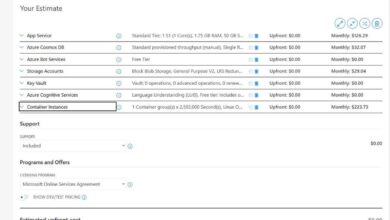
Azure uses a pay-as-you-go pricing model, meaning you only pay for what you use. However, costs can add up quickly without proper monitoring and optimization.
Understanding Azure Pricing Models
Azure offers several pricing options:
- Pay-As-You-Go: Standard model with hourly or per-minute billing.
- Reserved Instances: Commit to 1- or 3-year terms for up to 72% savings on VMs.
- Spot Instances: Use unused capacity at steep discounts (up to 90%) for non-critical workloads.
Each service has its own pricing structure. For example, Azure Blob Storage is priced based on:
- Amount of data stored
- Number of transactions (reads/writes)
- Data transfer out to the internet
Microsoft provides a free pricing calculator to estimate costs before deployment.
Free Tier and Azure Credits for Students
Azure offers a generous free tier to help users get started. New users receive:
- $200 in credits for the first 30 days
- Access to over 55 services for free for 12 months (e.g., 5 GB of Blob Storage, 750 hours of VM usage)
- Always-free services like 1 million Azure Function executions per month
Additionally, students can get $100 in Azure credits and free access to developer tools through the Azure for Students program.
Azure What Is: Real-World Use Cases and Industry Applications
The true power of ‘Azure what is’ becomes evident when we look at real-world applications. Organizations across industries use Azure to solve complex problems, improve efficiency, and innovate.
Healthcare: Secure Data and AI-Driven Diagnostics
Hospitals and clinics use Azure to store electronic health records (EHR) securely while complying with HIPAA. Azure AI helps analyze medical images for early detection of diseases like cancer.
For example, the University of California, San Francisco (UCSF) uses Azure to accelerate medical research and improve patient care through data analytics.
Retail and E-Commerce: Personalization and Scalability
Retailers leverage Azure to handle traffic spikes during sales events like Black Friday. Using Azure App Service and Azure CDN, they ensure fast, reliable performance.
AI-powered recommendation engines analyze customer behavior to deliver personalized shopping experiences. Companies like ASOS and Woolworths use Azure to power their digital platforms.
Manufacturing and IoT: Predictive Maintenance
Azure IoT Hub connects millions of devices—from factory machines to smart sensors. By collecting real-time data, manufacturers can predict equipment failures before they happen.
Siemens uses Azure IoT to monitor industrial equipment globally, reducing downtime and maintenance costs.
“The cloud is not about replacing your IT. It’s about amplifying your business.” — Scott Guthrie, Executive Vice President, Microsoft Cloud & AI
Azure What Is: Getting Started Guide for Beginners
If you’re new to cloud computing, starting with Azure might seem overwhelming. But with the right steps, you can begin building in minutes.
Creating Your First Azure Account
Visit Azure Free Account and sign up using your email. You’ll need a credit card for verification, but you won’t be charged unless you upgrade.
Once registered, you’ll gain access to the Azure portal—a web-based dashboard to manage all your resources.
Deploying Your First Resource: A Simple Web App
Follow these steps to deploy a basic web app:
- Log in to the Azure portal.
- Click ‘Create a resource’ and search for ‘Web App’.
- Choose a name, runtime stack (e.g., .NET, Node.js), and region.
- Select ‘Free’ tier for learning.
- Click ‘Review + Create’, then ‘Create’.
In minutes, your app will be live. You can then connect it to a custom domain or add a database.
Learning Resources and Certification Paths
Microsoft offers free learning paths through Microsoft Learn. Popular beginner modules include:
- ‘Introduction to Azure’
- ‘Fundamentals of Cloud Computing‘
- ‘Get started with Azure Virtual Machines’
For career advancement, consider certifications like:
- Azure Fundamentals (AZ-900): Entry-level, no experience required.
- Azure Administrator (AZ-104): For managing Azure environments.
- Azure Developer (AZ-204): For building cloud applications.
These credentials are highly valued in the IT job market.
What is Azure used for?
Azure is used for a wide range of purposes, including hosting websites and applications, storing and analyzing data, running virtual machines, implementing AI and machine learning models, managing IoT devices, and enabling hybrid cloud environments. It serves industries like healthcare, finance, retail, and government.
Is Azure free to use?
Azure is not entirely free, but it offers a free tier with $200 in credits for new users and access to over 55 services for free for 12 months. Some services, like Azure Functions (1M executions/month), are always free. You only pay for what you use beyond the free limits.
How does Azure compare to AWS?
Azure and AWS are both leading cloud providers. AWS has a larger market share and more services, but Azure excels in hybrid cloud integration and Microsoft product compatibility. Azure is often preferred by enterprises already using Microsoft tools like Active Directory and Office 365.
Can I use Azure for machine learning?
Yes, Azure provides robust machine learning tools through Azure Machine Learning Studio and Cognitive Services. You can build, train, and deploy models using automated ML, Jupyter notebooks, and MLOps pipelines. It’s ideal for both beginners and data science professionals.
What is the difference between Azure and Microsoft 365?
Azure is a cloud computing platform for infrastructure, AI, and application development, while Microsoft 365 is a productivity suite (Word, Excel, Teams, etc.). However, they integrate closely—Azure Active Directory manages identities for Microsoft 365 users.
So, when you ask ‘Azure what is,’ the answer is multifaceted: it’s a global cloud platform, a security leader, an AI enabler, and a business transformer. Whether you’re a developer, IT professional, or business leader, Azure offers tools to innovate faster, scale securely, and stay competitive. With its hybrid strengths, enterprise-grade compliance, and seamless Microsoft integration, Azure isn’t just another cloud—it’s a strategic advantage. Start exploring today, leverage free resources, and take your first step into the future of computing.
azure what is – Azure what is menjadi aspek penting yang dibahas di sini.
Further Reading: