When it comes to cloud computing, ‘azure standard’ isn’t just a buzzword—it’s a game-changer. Microsoft’s Azure Standard offerings deliver scalable, secure, and cost-effective solutions for businesses of all sizes. Let’s dive into what makes it a powerhouse in the cloud world.






What Is Azure Standard? A Complete Overview

The term azure standard refers to a suite of foundational cloud services provided by Microsoft Azure that balance performance, reliability, and affordability. These services form the backbone of many enterprise cloud strategies, offering everything from virtual machines to storage and networking solutions tailored for real-world business needs.
Defining Azure Standard Services
Azure Standard isn’t a single product but a classification within Azure’s broader service tiers. It typically sits between the basic and premium tiers, offering enhanced features over entry-level options while remaining more cost-efficient than high-end solutions.
- Includes services like Standard VMs, Standard SSDs, and Standard Load Balancers
- Designed for production workloads requiring consistent performance
- Offers SLAs (Service Level Agreements) of up to 99.9%
For example, an Azure Standard VM provides guaranteed CPU performance, memory, and disk I/O, making it ideal for web servers, small databases, and development environments.
How Azure Standard Differs from Basic and Premium Tiers
Understanding the hierarchy is crucial. The azure standard tier outperforms the Basic tier in availability, performance, and support, while avoiding the high costs of Premium services.
- Basic Tier: No SLA, best for testing and non-critical apps
- Standard Tier: Full SLA, auto-scaling, high availability options
- Premium Tier: Highest performance, ultra-low latency, advanced features
“The Standard tier strikes the perfect balance for most production applications—reliable without breaking the bank.” — Microsoft Azure Architecture Center
Key Features of Azure Standard Services
The strength of azure standard lies in its robust feature set designed to support scalable and secure cloud operations. These features make it a go-to choice for IT managers and cloud architects.
High Availability and Scalability
One of the standout aspects of Azure Standard is its built-in support for high availability. Services like Standard Availability Sets and Zone-Redundant configurations ensure your applications stay online even during hardware failures.
- Availability Sets distribute VMs across fault and update domains
- Zone-redundant services span multiple data centers within a region
- Auto-scaling rules adjust capacity based on demand
This means your e-commerce site won’t go down during Black Friday spikes, thanks to azure standard auto-scaling groups that dynamically add resources.
Enhanced Security and Compliance
Security is baked into every layer of Azure Standard. From network security groups to disk encryption, Microsoft ensures your data is protected by default.
- Integration with Azure Security Center for threat detection
- Support for Azure Disk Encryption using customer-managed keys
- Compliance with ISO 27001, HIPAA, GDPR, and more
For regulated industries like healthcare and finance, the azure standard compliance framework reduces audit complexity and ensures data sovereignty.
Cost-Effective Performance
Unlike premium offerings that charge for maximum performance 24/7, azure standard delivers predictable pricing with on-demand and reserved instance options.
- Pay-as-you-go pricing for flexible budgeting
- Reserved Instances offer up to 72% savings over pay-as-you-go
- Hybrid Benefit allows use of existing Windows Server licenses
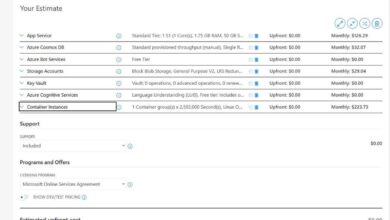
According to Azure’s Pricing Calculator, a Standard D4s v4 VM costs around $0.192/hour on pay-as-you-go, but drops to $0.110/hour with a 1-year reservation—ideal for steady workloads.
Azure Standard vs. AWS and Google Cloud: A Competitive Edge
While AWS and Google Cloud dominate headlines, azure standard holds its own—especially for enterprises already invested in the Microsoft ecosystem.
Integration with Microsoft Ecosystem
Azure Standard shines when used alongside Microsoft 365, Active Directory, and SQL Server. This seamless integration reduces migration friction and simplifies identity management.
- Single Sign-On (SSO) across Azure and Office 365
- Hybrid identity with Azure AD Connect
- Direct connectivity to on-premises SQL Server via Azure ExpressRoute
For organizations using Windows Server and .NET applications, migrating to azure standard VMs is often faster and cheaper than moving to AWS EC2 or Google Compute Engine.
Pricing and Value Comparison
Let’s compare a typical web server setup: a 4-core, 16GB RAM VM with 100GB SSD storage.
- Azure Standard: ~$150/month (D4s v4 with 1-year reservation)
- AWS EC2 (General Purpose m5.xlarge): ~$170/month (1-year reserved)
- Google Cloud (n2-standard-4): ~$160/month (1-year committed use)
While prices are close, Azure adds value through Hybrid Benefit, potentially cutting costs by another 40% for licensed Windows workloads.
Global Reach and Data Residency
Azure operates in 60+ regions worldwide—more than any other cloud provider. This is critical for azure standard users who must comply with local data laws.
- Regions in Africa, Asia, Europe, and South America
- Support for data residency requirements in GDPR, CCPA, etc.
- Edge Zones for low-latency applications
For example, a European bank can deploy azure standard services in the Germany West Central region to meet strict data sovereignty rules.
Top Use Cases for Azure Standard
The versatility of azure standard makes it suitable for a wide range of applications, from small startups to Fortune 500 companies.
Web Hosting and Application Servers
Many businesses use azure standard VMs to host websites, APIs, and backend services. With auto-scaling and load balancing, traffic spikes are handled gracefully.
- Run WordPress, Drupal, or custom .NET applications
- Use Azure App Service (Standard Tier) for PaaS hosting
- Integrate with Azure CDN for faster content delivery
A media company, for instance, can use azure standard App Service to deliver news content globally with 99.95% uptime.
Database Hosting with Azure SQL Database
Azure SQL Database’s Standard tier offers managed SQL Server instances with automated backups, patching, and monitoring.
- Standard S2: 50 DTUs, 250GB storage
- Standard S4: 100 DTUs, 250GB storage
- Standard S6: 200 DTUs, 250GB storage
Compared to self-managed SQL Server on a VM, the azure standard SQL tier reduces administrative overhead and improves reliability.
Disaster Recovery and Backup Solutions
With Azure Site Recovery and Standard-tier storage, organizations can implement cost-effective disaster recovery (DR) strategies.
- Replicate on-premises VMs to azure standard VMs
- Use Standard LRS or ZRS storage for backup data
- Failover testing without downtime
A manufacturing firm can replicate its ERP system to Azure, ensuring business continuity during outages—all within a predictable azure standard budget.
How to Optimize Costs with Azure Standard
While azure standard is cost-effective by design, smart optimization can lead to even greater savings.
Leverage Reserved Instances and Savings Plans
Committing to 1- or 3-year terms for VMs and databases unlocks significant discounts.
- Up to 72% off pay-as-you-go prices for VMs
- Savings Plans apply across services (Compute, SQL, etc.)
- Flexible: Reservations can be exchanged or canceled
For stable workloads like domain controllers or internal apps, Reserved Instances are a no-brainer.
Use Azure Cost Management Tools
Microsoft provides powerful tools to monitor and optimize spending.
- Azure Cost Management + Billing dashboard
- Recommendations for shutting down idle resources
- Budget alerts and exportable reports
One customer reduced their azure standard costs by 38% after identifying and deallocating unused VMs through these tools.
Right-Size Your Resources
Over-provisioning is a common cost driver. Azure Advisor can recommend optimal VM sizes based on actual usage.
- Downsize from D8s v4 to D4s v4 if CPU usage is below 30%
- Switch from Standard SSD to Standard HDD for archival data
- Use burstable VMs (B-series) for low-usage workloads
Right-sizing isn’t about cutting corners—it’s about aligning resources with real needs, a core principle of azure standard efficiency.
Security and Compliance in Azure Standard
Security isn’t an add-on—it’s embedded in the azure standard experience from day one.
Network Security with NSGs and Firewalls
Network Security Groups (NSGs) act as virtual firewalls, controlling inbound and outbound traffic to VMs and subnets.
- Create rules to allow only HTTPS (port 443) and RDP (port 3389)
- Use Application Security Groups (ASGs) for dynamic rule management
- Integrate with Azure Firewall for advanced threat protection
For example, a healthcare app using azure standard can restrict database access to only application servers, reducing attack surface.
Data Encryption and Key Management
All data at rest in azure standard services is encrypted by default using Microsoft-managed keys. For greater control, customers can use Azure Key Vault.
- Enable Azure Disk Encryption for VMs
- Store encryption keys in Azure Key Vault with HSM support
- Rotate keys automatically or on-demand
This ensures compliance with regulations like HIPAA, where encryption of patient data is mandatory.
Audit and Monitoring with Azure Monitor
Visibility is key to security. Azure Monitor collects logs, metrics, and traces across all azure standard resources.
- Set up alerts for failed login attempts
- Track VM performance and resource utilization
- Integrate with Azure Sentinel for SIEM capabilities
A financial institution can use Azure Monitor to detect suspicious activity in real time, triggering automated responses via Logic Apps.
Future Trends: How Azure Standard Is Evolving
The cloud landscape is changing fast, and azure standard is evolving to meet new demands in AI, edge computing, and sustainability.
Integration with AI and Machine Learning
Microsoft is embedding AI into core Azure services. Soon, azure standard users may get AI-driven optimization suggestions built into the portal.
- Predictive scaling based on historical traffic
- AI-powered security anomaly detection
- Automated cost-saving recommendations
Imagine your azure standard VMs automatically resizing before a traffic surge—powered by AI forecasting.
Edge Computing and IoT Support
With Azure IoT Edge and Azure Stack Edge, azure standard workloads can now run closer to data sources.
- Process sensor data in real time at remote locations
- Reduce latency for industrial automation
- Synchronize with cloud for centralized analytics
A logistics company could use azure standard containers on edge devices to track shipments without constant cloud connectivity.
Sustainability and Green Cloud Initiatives
Microsoft has committed to being carbon negative by 2030. azure standard benefits from this through energy-efficient data centers and renewable energy use.
- Azure regions powered by 100% renewable energy
- Carbon intensity tracking in Azure Portal
- Efficient hardware design reduces power consumption
Choosing azure standard isn’t just smart financially—it’s a step toward a greener IT strategy.
Getting Started with Azure Standard: A Step-by-Step Guide
Ready to deploy your first azure standard resource? Here’s how to begin.
Create an Azure Account and Subscription
Visit Azure Free Account to sign up. You’ll get $200 in credits and access to over 25 free services for 12 months.
- Use your Microsoft account or create a new one
- Enter billing details (no charge until free tier ends)
- Choose a subscription name (e.g., “Production”)
Deploy Your First Standard VM
Navigate to the Azure Portal, click “Create a resource”, and search for “Virtual Machine”.
- Select a region (e.g., East US)
- Choose a Standard VM size (e.g., D2s v4)
- Configure OS (Windows or Linux)
- Set up network security group with RDP/SSH access
- Review and create
In minutes, you’ll have a fully functional azure standard VM ready for use.
Monitor and Optimize Performance
After deployment, use Azure Monitor to track CPU, memory, and disk usage.
- Set up alerts for high CPU (e.g., >80%)
- Use Azure Advisor for optimization tips
- Enable auto-scaling if traffic grows
Continuous monitoring ensures your azure standard environment stays efficient and reliable.
What is Azure Standard used for?
Azure Standard is used for hosting production workloads like web servers, databases, and enterprise applications. It offers a balance of performance, availability, and cost, making it ideal for businesses that need reliable cloud infrastructure without premium pricing.
How much does Azure Standard cost?
Costs vary by service. For example, a Standard D2s v4 VM costs around $0.096/hour on pay-as-you-go, or $69/month with a 1-year reservation. Azure SQL Database Standard tier starts at ~$15/month. Use the Azure Pricing Calculator for accurate estimates.
Is Azure Standard secure?
Yes. Azure Standard includes built-in security features like network security groups, disk encryption, and integration with Azure Security Center. It complies with major standards like GDPR, HIPAA, and ISO 27001, making it suitable for sensitive workloads.
Can I upgrade from Basic to Azure Standard?
Absolutely. You can upgrade VMs, databases, and other resources from Basic to Standard tiers directly in the Azure portal. This is common when moving from development to production environments.
Does Azure Standard support hybrid cloud setups?
Yes. Azure Standard integrates seamlessly with on-premises environments via Azure Arc, ExpressRoute, and Azure AD Connect. This makes it ideal for hybrid cloud strategies, especially for organizations using Microsoft technologies.
From cost efficiency to enterprise-grade security, azure standard stands out as a powerful, flexible, and future-ready cloud solution. Whether you’re hosting a website, running a database, or building a disaster recovery plan, Azure Standard delivers the reliability and scalability modern businesses demand. With Microsoft’s continuous innovation in AI, edge computing, and sustainability, the platform is poised to remain a leader in the cloud space. By understanding its features, optimizing costs, and leveraging its ecosystem, organizations can unlock the full potential of the cloud—without overpaying or overcomplicating their infrastructure.
Further Reading: