Managing cloud expenses can feel like navigating a maze—especially when you’re dealing with a vast ecosystem like Microsoft Azure. That’s where the azure price cal comes in, a crucial step toward transparency, control, and cost efficiency. Whether you’re a startup founder or an enterprise architect, understanding your cloud spend is no longer optional—it’s essential.





What Is Azure Price Cal and Why It Matters

The term azure price cal refers to the process of calculating, forecasting, and optimizing the costs associated with using Microsoft Azure services. It’s not just about knowing how much you’re spending, but understanding where every dollar goes—compute, storage, networking, and more. With Azure’s pay-as-you-go model, costs can escalate quickly if not monitored.
Understanding the Basics of Azure Pricing
Azure operates on a consumption-based pricing model. You pay only for what you use, which offers flexibility but also complexity. Services are priced based on factors like region, instance type, data transfer volume, and service tier. For example, a virtual machine in East US will cost differently than the same VM in Southeast Asia.
- Compute resources (VMs, containers, serverless)
- Storage options (Blob, Disk, Archive)
- Networking (bandwidth, load balancers, VPN gateways)
- Managed services (Azure SQL, Cosmos DB, AI tools)
This granular pricing makes the azure price cal process vital for budgeting and forecasting.
The Role of Cost Management in Cloud Strategy
Effective cost management isn’t just a finance team’s job—it’s a shared responsibility across IT, DevOps, and leadership. Without a solid azure price cal strategy, organizations risk overspending by 30% or more, according to a Gartner report. Proactive cost control enables better resource allocation and faster innovation.
“Cloud waste is real. On average, enterprises waste 35% of their cloud spend due to idle resources and poor planning.” — Flexera 2023 State of the Cloud Report
Top 7 Tools for Azure Price Cal in 2024
Accurate azure price cal requires the right tools. Microsoft and third-party vendors offer solutions that help estimate, track, and optimize cloud costs. Here are the top seven tools you should know.
1. Azure Pricing Calculator
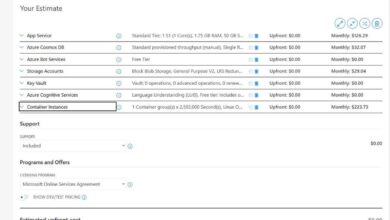
The Azure Pricing Calculator is Microsoft’s official tool for estimating costs before deployment. It allows users to build a virtual environment by selecting services, regions, and configurations, then generates a real-time cost estimate.
- Supports over 100 Azure services
- Enables scenario-based modeling (e.g., dev vs. production)
- Exports estimates to Excel or PDF for sharing
This tool is ideal for initial azure price cal planning and stakeholder presentations.
2. Azure Cost Management + Billing
Integrated directly into the Azure portal, Azure Cost Management + Billing provides real-time tracking, budgeting, and forecasting. It’s one of the most powerful tools for ongoing azure price cal operations.
- Real-time cost visualization with dashboards
- Custom alerts for budget thresholds
- Forecasting up to 30 days ahead
- Tag-based cost allocation for departments or projects
It supports multi-subscription and multi-tenant environments, making it enterprise-ready.
3. Azure Total Cost of Ownership (TCO) Calculator
For organizations migrating from on-premises infrastructure, the TCO Calculator is indispensable. It compares the long-term costs of running workloads on-premises versus in Azure.
- Factors in hardware, power, cooling, and IT labor
- Generates detailed reports with ROI analysis
- Supports hybrid and full-cloud migration scenarios
This tool enhances the azure price cal process by providing a strategic financial perspective.
4. CloudHealth by VMware
CloudHealth is a leading third-party cloud management platform that supports Azure, AWS, and Google Cloud. It offers deep cost analytics, optimization recommendations, and governance controls.
- Automated cost anomaly detection
- Right-sizing recommendations for VMs
- Carbon footprint tracking for sustainability goals
Its AI-driven insights make it a top choice for advanced azure price cal workflows.
5. Spot by NetApp (formerly Spotinst)
Spot by NetApp specializes in cost optimization using spot instances, reserved instances, and automated scaling. It’s particularly effective for batch processing and CI/CD workloads.
- Reduces compute costs by up to 90%
- Integrates with Kubernetes and serverless environments
- Provides real-time cost breakdowns by team or application
For teams focused on aggressive azure price cal optimization, Spot is a game-changer.
6. Azure Advisor
Azure Advisor is a built-in recommendation engine that analyzes your Azure usage and suggests improvements for cost, performance, security, and reliability.
- Identifies underutilized VMs (e.g., CPU < 5%)
- Recommends reserved instances for long-term savings
- Alerts on idle load balancers or unattached disks
While not a full-fledged azure price cal tool, it complements cost management by identifying waste.
7. Infracost
Infracost is an open-source tool that integrates with Terraform to provide cost estimates during infrastructure-as-code (IaC) planning. It enables azure price cal before deployment, shifting cost awareness left in the DevOps pipeline.
- Shows cost impact of Terraform changes
- Integrates with GitHub, GitLab, and CI/CD tools
- Supports Azure, AWS, and GCP
It’s perfect for teams practicing DevOps and Infrastructure-as-Code.
How to Perform an Accurate Azure Price Cal: Step-by-Step
Conducting a precise azure price cal isn’t a one-time task—it’s a repeatable process. Follow these steps to ensure accuracy and consistency.
Step 1: Define Your Workload Requirements
Start by documenting your technical needs: number of VMs, storage capacity, expected traffic, and uptime requirements. This forms the foundation of your azure price cal.
- Identify compute instance types (e.g., B-series for burstable, D-series for general purpose)
- Determine storage redundancy (LRS, ZRS, GRS)
- Estimate data egress (outbound data transfer costs)
Clear requirements prevent over-provisioning and reduce guesswork.
Step 2: Use the Azure Pricing Calculator
Input your workload specs into the Azure Pricing Calculator. Select services, configure regions, and adjust quantities. Save multiple scenarios (e.g., low, medium, high traffic) for comparison.
- Use tags to label environments (dev, staging, prod)
- Factor in reserved instance discounts (1- or 3-year terms)
- Include support plan costs (Basic, Developer, Standard, Professional Direct)
This step delivers your initial azure price cal estimate.
Step 3: Apply Discounts and Commitments
Azure offers several pricing models that can drastically reduce costs:
- Reserved Instances (RIs): Save up to 72% on VMs with 1- or 3-year commitments
- Spot VMs: Use for fault-tolerant workloads at up to 90% discount
- Monetary Commitments (Azure Dev/Test, EA): Prepay for credits at a discount
Adjust your azure price cal to reflect these savings.
Step 4: Monitor and Optimize Post-Deployment
Once deployed, switch from estimation to monitoring. Use Azure Cost Management to track actual spend against your azure price cal forecast.
- Set up budgets with alerts at 50%, 75%, and 90% thresholds
- Use tags to allocate costs to teams, projects, or departments
- Review Azure Advisor recommendations weekly
Continuous monitoring ensures your azure price cal remains accurate over time.
Common Mistakes in Azure Price Cal and How to Avoid Them
Even experienced teams make errors in azure price cal. Recognizing these pitfalls can save thousands.
Mistake 1: Ignoring Data Egress Costs
Data transfer out of Azure (egress) is often overlooked. While inbound data is free, outbound traffic incurs charges—especially across regions or to the internet.
- Costs vary by destination (e.g., US to Europe vs. US to Asia)
- CDN usage can reduce egress fees
- Architect applications to minimize cross-region traffic
Always include egress in your azure price cal.
Mistake 2: Over-Provisioning Resources
It’s common to deploy larger VMs “just in case,” but this leads to wasted spend. A D8s v3 VM costs significantly more than a D4s v3, even if CPU usage is under 10%.
- Use Azure Monitor to assess actual utilization
- Start small and scale up as needed
- Leverage autoscaling for variable workloads
Right-sizing is a core principle of accurate azure price cal.
Mistake 3: Forgetting About Idle Resources
Unattached disks, stopped VMs, and unused load balancers still incur charges. These “zombie resources” silently inflate your bill.
- Schedule shutdowns for non-production environments
- Use Azure Policy to enforce tagging and auto-deletion
- Run monthly cleanup scripts
Regular audits are essential for reliable azure price cal results.
Advanced Strategies for Azure Price Cal Optimization
Once you’ve mastered the basics, elevate your azure price cal with advanced techniques.
Leveraging Reserved Instances Strategically
Reserved Instances (RIs) offer deep discounts but require commitment. The key is to reserve only for stable, predictable workloads.
- Analyze 30-90 days of usage data before purchasing
- Use Azure Cost Management’s RI recommendations
- Consider the Reserved Instance Marketplace to sell unused commitments
Strategic RI usage can cut compute costs by over 50% in your azure price cal.
Using Spot VMs for Batch and CI/CD Workloads
Spot VMs are ideal for interruptible tasks like rendering, data processing, or testing. They offer up to 90% savings but can be reclaimed by Azure with 30 seconds’ notice.
- Pair with autoscaling groups for resilience
- Use low-priority scale sets in Azure Kubernetes Service (AKS)
- Combine with checkpointing to save progress
Incorporating Spot VMs into your azure price cal model can dramatically reduce non-critical workload costs.
Implementing FinOps Practices
FinOps (Financial Operations) is a cultural and technical framework for managing cloud costs. It bridges finance, engineering, and business teams.
- Establish cloud cost accountability per team
- Run monthly FinOps reviews with stakeholders
- Use showback/chargeback models to allocate costs
FinOps transforms azure price cal from a technical task into a business discipline.
Integrating Azure Price Cal into DevOps Pipelines
The future of cost management is proactive, not reactive. By integrating azure price cal into DevOps workflows, teams can catch cost issues before deployment.
Cost Estimation in Pull Requests
Tools like Infracost can display cost estimates directly in GitHub pull requests. When a developer modifies infrastructure code, a comment appears showing the cost impact.
- Prevents accidental provisioning of expensive resources
- Encourages cost-aware development
- Supports policy-as-code for budget enforcement
This shift-left approach makes azure price cal a team-wide responsibility.
Automated Cost Alerts in CI/CD
Integrate cost checks into your CI/CD pipeline. For example, if a Terraform plan exceeds a $500/month threshold, the pipeline can fail or require manual approval.
- Use custom scripts or third-party tools like Datadog or Cloud Custodian
- Define cost policies based on environment (dev vs. prod)
- Log cost events for audit and compliance
Automation ensures that azure price cal is enforced consistently.
Infrastructure-as-Code (IaC) Best Practices
IaC tools like Terraform, ARM templates, and Bicep enable repeatable, auditable deployments. When combined with cost estimation, they become powerful azure price cal enablers.
- Tag all resources for cost tracking
- Use modules to standardize configurations
- Version control all changes for cost forensics
IaC turns azure price cal into a scalable, repeatable process.
Future Trends in Azure Price Cal and Cloud Cost Management
The landscape of azure price cal is evolving rapidly. New technologies and practices are shaping how organizations manage cloud spend.
AI-Powered Cost Forecasting
Microsoft and third-party vendors are integrating AI into cost tools. These systems analyze historical usage, predict future trends, and recommend optimizations with increasing accuracy.
- Azure Cost Management already uses machine learning for forecasting
- Future versions may predict cost anomalies before they occur
- AI could auto-adjust reservations based on usage patterns
AI will make azure price cal more predictive and less reactive.
Carbon-Aware Cost Optimization
Sustainability is becoming a key factor in cloud decisions. Tools now track carbon emissions alongside costs, enabling “green” azure price cal.
- Choose regions powered by renewable energy
- Optimize for energy efficiency, not just cost
- Report on carbon footprint for ESG compliance
The future of azure price cal includes environmental impact.
Unified Multi-Cloud Cost Platforms
As organizations adopt multi-cloud strategies, the need for unified cost management grows. Platforms like CloudHealth and Flexera One offer consolidated views across Azure, AWS, and GCP.
- Eliminate siloed cost data
- Compare pricing models across providers
- Optimize workload placement based on cost and performance
Unified platforms will dominate the next generation of azure price cal.
What is the Azure Pricing Calculator?
The Azure Pricing Calculator is a free tool that helps estimate the cost of Azure services before deployment. Users can select services, configure settings, and see real-time pricing estimates, making it essential for accurate azure price cal.
How can I reduce my Azure cloud costs?
You can reduce Azure costs by using reserved instances, spot VMs, right-sizing resources, eliminating idle assets, and leveraging tools like Azure Cost Management and Advisor. Integrating cost checks into DevOps pipelines also helps prevent overspending.
What is the difference between Azure Pricing Calculator and TCO Calculator?
The Azure Pricing Calculator estimates ongoing operational costs of Azure services, while the TCO Calculator compares the total cost of running workloads on-premises versus in Azure, including hardware, maintenance, and labor.
Can I automate Azure cost monitoring?
Yes, Azure Cost Management allows you to set up automated budgets, alerts, and reports. You can also integrate with Power BI, Azure Monitor, and third-party tools for advanced automation and visualization.
Is there a free tool for Azure price cal?
Yes, Microsoft offers several free tools for azure price cal, including the Azure Pricing Calculator, Azure Cost Management + Billing, and Azure Advisor. These tools provide estimation, monitoring, and optimization capabilities at no extra cost.
Mastering azure price cal is no longer optional—it’s a strategic imperative. With the right tools, processes, and cultural practices, organizations can gain full visibility into their cloud spending, eliminate waste, and optimize for both cost and performance. From the Azure Pricing Calculator to advanced FinOps frameworks, the ecosystem offers powerful solutions for every stage of the cloud journey. As AI, sustainability, and multi-cloud complexity shape the future, proactive cost management will remain a cornerstone of cloud success. Start your azure price cal journey today and turn cloud spending from a black box into a strategic advantage.
Recommended for you 👇
Further Reading: